
If you were hit by an unlicensed driver in Florida, here is the honest answer up front: Isaiah's Law changes how the state punishes repeat unlicensed drivers, but it does not create a new claim for you, it does not pay your medical bills, and it does not guarantee you a dime. Your money for medical care and lost wages almost always comes from insurance, usually your own, not from this law. The criminal and license side of a crash and the civil injury side run on separate tracks, and knowing the difference keeps you from waiting on the wrong one.
We are Templer & Hirsch, Injury Lawyers, based in Aventura in South Florida, and we represent people hurt in Florida car accidents. This post is general information about a new state law and how injury claims usually work when the at-fault driver had no license. If you want the practical checklist version, our page on car accident representation in Aventura covers how we help, and our newsletter on what to do when the at-fault driver is uninsured walks through the closely related no-insurance problem.
Key takeaways
- Isaiah's Law (House Bill 35, 2026) became Chapter 2026-53, Laws of Florida. The Governor approved it on April 23, 2026, and it took effect July 1, 2026.
- The law adds driving without a valid license to the offenses that count toward a habitual traffic offender designation under section 322.264, Florida Statutes. It is a criminal and license law, not an injury law.
- It does not create a new civil claim, does not pay your damages, and does not promise any recovery.
- When an unlicensed driver has no insurance and no money, your own personal injury protection (PIP) and uninsured or underinsured motorist coverage are usually what matter most.
- Florida did not repeal no-fault. PIP and the $10,000 minimum are still required in 2026.
The Short Answer: What Isaiah's Law Does, and What It Does Not Do for Your Injury Claim
Isaiah's Law makes it easier for Florida to strip a repeat unlicensed driver of the privilege to drive. It does nothing to pay for your injuries. Those are two different systems: one is the state deciding who stays off the road, the other is you recovering money for a crash. A criminal charge or a license revocation against the driver who hit you does not put money in your pocket, and it is not a substitute for an insurance claim.
The diagram below shows the split. The left side is what Isaiah's Law touches. The right side is where any actual recovery for your injuries comes from.

What Changed on July 1, 2026
As of July 1, 2026, driving a motor vehicle without a valid license now counts toward a habitual traffic offender designation in Florida. That change comes from House Bill 35, named Isaiah's Law in the House staff analysis, which the Governor approved on April 23, 2026 as Chapter 2026-53, Laws of Florida.
Under section 322.264, Florida Statutes, a "habitual traffic offender" is a driver who piles up a set number of serious convictions inside a five-year window. Before this law, driving on a suspended or revoked license already counted. Isaiah's Law adds driving without ever having a valid license to that list. A driver is not labeled a habitual offender for one ticket. The designation follows a pattern of convictions.
Once the state designates someone a habitual traffic offender, it revokes driving privileges for five years under section 322.27, Florida Statutes. According to the House staff analysis for House Bill 35, a person who has no driver license and is designated a habitual traffic offender is not eligible for a restricted or "hardship" license during that five-year revocation, and must wait 12 months from the revocation before petitioning the Department of Highway Safety and Motor Vehicles (DHSMV) for reinstatement. In plain terms, the state can keep a repeat unlicensed driver off the road longer. That is the point of the law, and that is where it stops.
Why an Unlicensed Driver Is Often an Uninsured Driver
A driver with no valid license usually cannot buy standard car insurance, so an unlicensed driver car accident often turns out to be an uninsured one too. That is the practical problem the law does not solve. Even if that driver is charged, and even if they later lose the right to drive for years, none of that pays your hospital bill.
Suing the driver directly is an option, but it is often a dead end for a real reason: someone driving illegally frequently has no insurance and no assets worth collecting. You can win a judgment on paper and still recover nothing. That is exactly why your own coverage matters more than the label the state puts on the other driver.
Where Your Own Coverage Comes In: PIP and Uninsured Motorist Coverage in Florida
When the at-fault driver has no license and no insurance, two parts of your own auto policy usually do the heavy lifting. This is general information, not a promise about your policy or your case.
Personal injury protection (PIP) is Florida's no-fault first layer. Under section 627.736, Florida Statutes, PIP pays a portion of your medical bills and lost wages regardless of who caused the crash, up to your policy limit. Florida requires a $10,000 minimum, and you generally have to get medical care within 14 days of the crash for those benefits to apply. Florida did not repeal no-fault, so PIP is still required in 2026, a point we cover in our post on whether Florida ended no-fault insurance.
Uninsured or underinsured motorist coverage exists for this exact situation. Under section 627.727, Florida Statutes, an insurer must offer uninsured motorist coverage, and it is included on your policy at your liability limits unless you rejected it in writing. If you kept it, this coverage can step in when the at-fault driver has no insurance, when they flee the scene, or when their coverage is too small to cover your injuries. It is the layer built for a crash with an unlicensed, uninsured driver. Whether it applies, and for how much, depends on your own policy.

What to Do at the Scene and in the Days After a Crash in Florida
What to do after a car accident in Florida does not change much because the other driver had no license. The steps below protect your health and your claim.
- Report the crash. Call the police and get a crash report. When a driver is unlicensed or uninsured, that report is often the record that documents it.
- Get medical attention promptly. See a doctor even if you feel fine, and do it within 14 days so your PIP benefits apply. Some injuries show up days later.
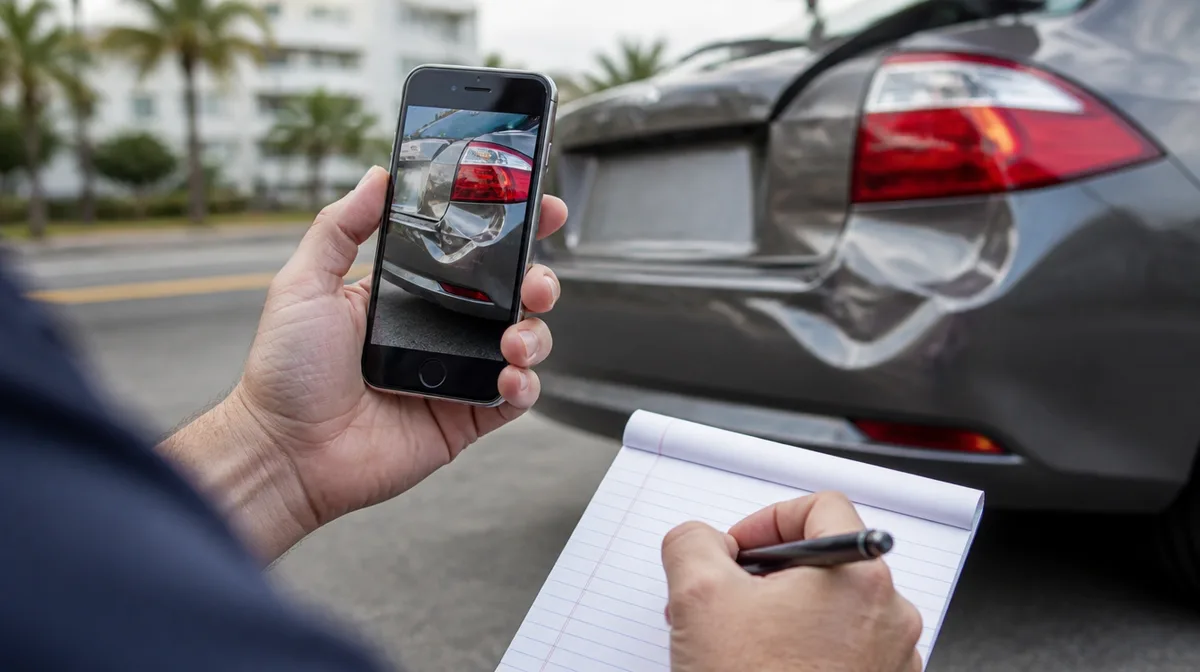
- Document the driver's status. Write down that the driver had no license or no insurance if you learn it, and photograph the vehicles, the scene, and any damage.
- Notify your own insurer. Tell your insurance company about the crash and ask about PIP and uninsured motorist coverage. Report it promptly, because policies have deadlines.
For the fuller version of these steps, see our guide on what to do after a car accident in Miami. If you are wondering how long a claim like this runs, our post on how long a personal injury case takes to settle in Florida sets honest expectations.
What Isaiah's Law Does Not Do: It Is Not a New Claim, and It Does Not Pay Your Damages
Isaiah's Law is not a new civil cause of action. It does not give crash victims a new way to sue, it does not create a fund, and it does not pay your damages. It changes the state's habitual traffic offender rules and nothing about who pays for your injuries. Anyone telling you the law itself will cover your bills is reading it wrong.
The value of the law to injured people is indirect. It may help keep a dangerous repeat driver off the road. Your recovery, if any, still runs through the insurance and civil system, and what you can recover depends on the coverage available and the facts of your case. No one can honestly promise a result.
Frequently Asked Questions
Q: What is Isaiah's Law in Florida?
A: Isaiah's Law is House Bill 35 from the 2026 session, enacted as Chapter 2026-53, Laws of Florida, effective July 1, 2026. It adds driving without a valid license to the offenses that count toward a habitual traffic offender designation under section 322.264, Florida Statutes.
Q: Does Isaiah's Law help pay my medical bills after a crash?
A: No. It is a criminal and license law, not an injury law. It does not pay medical bills, create a new claim, or guarantee any recovery. Money for your injuries comes from insurance and the civil system, not from this statute.
Q: I was hit by an unlicensed driver in Florida. Who pays for my injuries?
A: Usually your own coverage does first. Your PIP pays a share of medical bills and lost wages no matter who was at fault, and your uninsured or underinsured motorist coverage can apply when the other driver has no insurance. You can also pursue the driver directly, though an unlicensed driver often has no assets to collect.
Q: Is uninsured motorist coverage required in Florida?
A: It is not mandatory, but under section 627.727, Florida Statutes, insurers must offer it, and it is included on your policy unless you rejected it in writing. If you kept it, it is often the most important coverage in a crash with an unlicensed, uninsured driver.
Q: Did Florida repeal no-fault or PIP in 2026?
A: No. The 2026 repeal bills died, so Florida's no-fault system is still in place and the $10,000 PIP minimum is still required.
Free, confidential case review.
Hit by an unlicensed or uninsured driver in Florida? Let our attorneys review the specifics of your crash and your coverage, at no cost and no obligation.
Request Your Free Case EvaluationThis is general information, not legal advice; consult an attorney about your situation.
Sources (verify before relying on them):
- Florida Senate, CS/HB 35 (2026) bill history and status
- Chapter 2026-53, Laws of Florida (the enacted chapter law)
- House Final Bill Analysis for HB 35 (names Isaiah's Law; approved April 23, 2026; effective July 1, 2026)
- Section 322.264, Florida Statutes (habitual traffic offender)
- Section 627.736, Florida Statutes (personal injury protection)
- Section 627.727, Florida Statutes (uninsured and underinsured motorist coverage)