Defense Base Act Attorneys for Injured Overseas Contractors
Coming home hurt from an overseas contract is isolating. The job is far away, the paperwork is federal, and nobody around you has been through it. You are not alone. We have guided contractors through this for years, and we can guide you.
If you were hurt while working overseas on a U.S. government contract, the Defense Base Act (DBA) may entitle you to federal benefits: medical care, a share of your lost wages, and help if you cannot go back to the same work. It covers civilians like translators, security staff, drivers, and construction and logistics workers, even when the injury happened off base. The attorneys at Templer & Hirsch handle Defense Base Act claims for injured workers all over the world.
One thing to clear up first, because it costs people time. A Defense Base Act attorney, a DBA lawyer and a DBA attorney all mean the same thing, and so does a Defense Base Act law firm. There is no separate certification behind any of those labels, and searching for DBA lawyers or a Defense Base Act claims lawyer turns up the same offices. What actually matters is whether the office has run these claims before a Department of Labor administrative law judge, because the procedure has almost nothing in common with a state injury case. Ask how many they have handled before you ask anything else.
In our experience, the carriers behind these claims look for any reason to pay less or deny you outright. That is the work our Defense Base Act attorneys do every week. We handle denied claims and low settlement offers, psychological injury cases including PTSD, every filing deadline, direct negotiation with the insurer, and appeals before the Department of Labor. Call us for a free consultation and we will tell you where you stand.
The Defense Base Act: What Overseas Contractors Should Know
The Defense Base Act gives federal workers’ compensation to civilians working for US military operations overseas. The benefits are real and can be substantial, but the process has strict rules and deadlines, and insurance carriers fight these claims hard.
Who Is Covered
Under 42 U.S.C. §1651, the DBA covers civilians working on US military bases overseas, contractors supporting US government contracts abroad, and employees of public-works projects funded by the US government overseas. That includes translators, security personnel, construction workers, logistics, and IT staff, in war zones and peacetime alike. Coverage follows the contract rather than the name on your badge, so a job two or three layers down the subcontract chain still counts.
30-Day Notice and One-Year Filing Deadline
You must give written notice to your employer within 30 days of the injury, and file a formal claim with the US Department of Labor within one year (two years for occupational diseases like PTSD or hearing loss). The deadlines can be tolled if you didn’t immediately know an injury was work-related, and an attorney can preserve your timeline.
DBA Benefits Mirror LHWCA
The DBA incorporates the Longshore and Harbor Workers’ Compensation Act, so the benefit structure is similar: uncapped medical care, two-thirds of your average weekly wage up to the federal maximum, permanent impairment compensation, vocational rehabilitation, and death benefits including survivor compensation. Our nationwide longshoreman and dock worker injury lawyers run claims under that same statute for port and shipyard workers at home.
PTSD, TBI, and Psychological Injuries
The DBA fully recognizes psychological injuries arising from overseas service: PTSD, anxiety, depression, and traumatic brain injury. Insurance carriers fight these claims hardest, so strong medical documentation and expert support are essential. We’ve handled DBA claims since the early years of the post-9/11 contracting wave.
Third-Party Claims
The DBA is the exclusive remedy against your direct employer, but third-party negligence claims (against subcontractors, equipment manufacturers, or other employers on the same site) may be pursued in parallel for full personal injury damages.
Wondering how this compares to the state system you already know? Our guide to the difference between the Defense Base Act and workers’ compensation lines the two up on coverage, weekly caps, medical care, and deadlines.
Defense Base Act Insurance: Who Buys It and Who Pays You
Almost nobody who calls us has seen the policy their benefits come from, and that is where the surprises start. Defense Base Act insurance is workers’ compensation coverage your employer has to buy for civilian work on a US government contract overseas. You never pay a cent of it. The clause that forces the purchase is FAR 52.228-3, and it flows down into the subcontracts as well.
Four things about Defense Base Act coverage that change how a claim is handled:
- The carrier pays you, not your employer. A small group of insurers writes most DBA policies, and each one has patterns: which injuries it disputes, how it calculates average weekly wage, how quickly it moves to settle. Knowing which carrier is on the file before the first filing changes how we build the claim.
- You pick your own treating doctor. Under 33 U.S.C. §907(b) the choice is yours, and the employer picks only when you need care right away. Contractors give this up all the time because nobody told them.
- An act of war runs through a second law. Injuries from a war-risk hazard go through the War Hazards Compensation Act, where the government reimburses the carrier. It does not reduce what you are owed, but it changes who is arguing.
- No policy is not the end of your claim. Every employer has to secure payment under 33 U.S.C. §904(a), and if a subcontractor fails to, the prime contractor is on the hook. If nobody bought coverage, §905(a) lets you sue the company directly, without the usual defenses.
The full breakdown is in our guide to what Defense Base Act insurance covers, including what to do when your employer never bought a policy at all.
What Is a Defense Base Act Claim Worth?
This is the first question almost everyone asks, and the honest answer is that Defense Base Act settlements turn on four things: your average weekly wage, how much permanent impairment a doctor documents, whether you can go back to the same work, and how much future medical care the claim still carries.
Average weekly wage is where the biggest money is won and lost. Overseas contractor pay is built from a base wage plus uplifts: hazard pay, hardship differential, per diem, overtime and completion bonuses. Carriers routinely calculate the weekly compensation rate on the base figure alone. That single choice can cut a rate by half, and it is one of the most winnable arguments in a DBA claim.
Most claims end in a lump-sum settlement under Section 8(i) of the Longshore Act, which has to be approved by the Department of Labor before it is final. A Section 8(i) settlement usually closes out future medical care as well as wage benefits, so the number has to account for treatment you have not had yet. That is the part contractors most often get wrong on their own.
- Run your own numbers with our DBA settlement calculator.
- See the ranges that real claims land in, and why, in our guide to Defense Base Act settlement amounts.
- Working out the math behind the weekly rate? Read how Defense Base Act settlements are calculated.
- If the worst happened, survivors have their own benefit track: Defense Base Act death benefits.
No calculator can price a claim, because the fights are about facts. What it can do is show you whether the offer on your table is in the right neighborhood.
Common Defense Base Act Injuries We Handle
DBA claims arise wherever US contractors operate overseas. We’ve represented civilian contractors injured by:
- IEDs, mortar attacks, and combat-related blasts: common during the Iraq and Afghanistan deployments and ongoing in active theaters.
- Vehicle accidents: convoys, transport, off-road operations, and roadside attacks.
- Falls from heights at construction sites, base infrastructure, and rooftops.
- Equipment and machinery accidents: generators, vehicles, heavy equipment.
- PTSD and traumatic brain injury from sustained exposure to combat and post-traumatic events.
- Hearing loss and respiratory illness from explosions, gunfire, burn pits, and dust.
- Heatstroke and other environmental injuries in desert deployments.
- Sexual assault and harassment: covered under the DBA when arising from employment.
Each claim type has its own evidence requirements and medical support; we know how to build the record DBA carriers actually take seriously.
Burn Pit and Toxic Exposure Claims
Base camps across Iraq, Afghanistan, Syria, Kuwait and the Horn of Africa burned waste in open pits for years. Contractors who lived and worked beside them breathed the smoke daily. The illnesses that follow show up late: asthma, chronic bronchitis, constrictive bronchiolitis, sinus disease, and in some cases rare cancers. Late onset is the whole problem with these claims. A carrier will argue the condition came from smoking, from allergies, or from anything other than the deployment. Because a burn pit illness is an occupational disease rather than a single accident, the filing clock works differently, and it usually starts when you knew or should have known the illness was tied to your work. If you served near a burn pit and now have a breathing problem, the claim is worth reviewing even if you came home years ago. Our full guide to burn pit compensation for contractors covers why the PACT Act does not reach you and what the Defense Base Act pays instead.
Hearing Loss and Tinnitus
Hearing loss is one of the most common contractor injuries and one of the most often skipped. Gunfire, generators, flight lines, mortar impacts and heavy equipment do damage that builds slowly, so most people never report it while deployed. Under the DBA, hearing loss is treated as a scheduled award, which means the payment is set by a formula based on measured impairment rather than by how much work you lost. That formula makes the audiogram the single most important document in the claim. A baseline test from before deployment, if one exists, strengthens the case a great deal. Tinnitus, the constant ringing that many contractors live with, is often claimed alongside the hearing loss.
Traumatic Brain Injury
Blast exposure causes brain injuries that no scan may pick up. A contractor near an IED or repeated mortar impacts can walk away with no visible wound and then struggle for years with memory, sleep, headaches, balance and temper. Carriers lean on the normal imaging to argue nothing happened. Building a TBI claim means neuropsychological testing, treatment records that run continuously, and statements from the people who knew you before and after. TBI and PTSD also overlap heavily, and the two are frequently claimed together. Our Defense Base Act PTSD lawyers handle both sides of that overlap, and our guide explains how to prove a PTSD claim when the carrier says the records are thin.
Filing a DBA Claim: The Forms, the Deadlines, and What Happens
The paperwork is federal, and it is not the same as the state claim you may have filed before. Four steps decide whether the claim starts clean:
- Get treated, and say it happened at work. The first medical record is the one the carrier reads hardest. If the intake note says nothing about the job, expect that to come back later.
- Give your employer written notice within 30 days. This is the Form LS-201 notice of injury. A conversation with a supervisor is not notice, and memories of it do not survive a hearing.
- File Form LS-203 with the Department of Labor within one year. This is the actual claim, and it goes to the Division of Longshore and Harbor Workers’ Compensation, not to your employer. Occupational diseases, PTSD and hearing loss among them, generally carry two years.
- Document the wage, not just the injury. Pay stubs, the contract, the uplift schedule and the rotation calendar decide your weekly rate. Gather them before anyone asks.
The Department of Labor publishes the forms and the district office list on its Division of Longshore and Harbor Workers’ Compensation pages. For the long version of the process, our step-by-step guide to filing a DBA claim walks through each form, and how long a Defense Base Act claim takes sets expectations for the wait. If you want the short version of what to gather, see the seven documents you need to win a DBA case.
Worried about what representation costs? You do not pay us out of pocket, and in some situations the carrier can be ordered to pay an approved fee on top of your benefits. We walk through when that happens in who pays attorney fees in a Defense Base Act claim.
Denied Defense Base Act Claim: What Happens Next
A denial letter is not the end of the claim. It is the point where the case moves from a paperwork process into a legal one, and most contractors who give up do it here. Denials commonly rest on one of four arguments: the injury was not work-related, the condition existed before the deployment, the notice or filing was late, or the medical evidence does not support the disability being claimed. Each of those is contestable.
The dispute process runs in stages, and every stage has a deadline:
- Informal conference. A claims examiner at the Department of Labor brings both sides together and issues a written recommendation. The recommendation carries weight but neither side has to accept it.
- Request for a formal hearing. If the conference does not resolve it, either side files Form LS-18 and the case is referred to the Office of Administrative Law Judges.
- Hearing before an administrative law judge. This is a real evidentiary hearing with testimony, medical experts and cross-examination. The judge issues a written decision and order.
- Benefits Review Board. A compensation order becomes final 30 days after it is filed, so an appeal to the Board has to be filed inside that window (33 U.S.C. §921(a)).
- Federal court. A party still unhappy after the Board can seek review in federal court, with 60 days to file the petition (33 U.S.C. §921(c)).
The 30-day appeal window is the one that ends cases. Miss it and a wrong decision becomes permanent. If you have a denial letter or a decision you disagree with, the date on that letter matters more than anything else in the file, so call before the clock runs out.
For the reasons carriers give most often, see 6 reasons your DBA claim might be denied.
Claims Involving Major Overseas Contractors
Most people searching for help start with the name on their badge rather than the name of the law. We handle Defense Base Act claims for workers employed by the large government contractors and their subcontractors, including KBR, Halliburton, DynCorp International, Fluor, Amentum, Vectrus and V2X, PAE, CACI, L3Harris, Constellis, Triple Canopy, Sallyport and Global Linguist Solutions, along with the smaller staffing firms and local subcontractors that hire through them.
Who signed your paycheck matters less than it feels like it should. DBA coverage follows the contract, not the company, so subcontractors and second-tier staffing firms are covered on the same terms as the prime contractor. What the employer name does tell us is which insurance carrier is on the file, and that shapes the whole claim.
The same goes for where you were posted. We have represented contractors hurt in Iraq, Afghanistan and Syria, across Kuwait, Qatar and the UAE, at the Horn of Africa posts including Djibouti and Somalia, and on contracts in Europe and Asia. The country changes the facts and the travel, not your right to file. Deployments into active conflict zones bring their own evidence problems, which we cover in DBA claims and global conflict zones.
Defense Base Act Help by State
You do not need a Defense Base Act law firm in your own state. We take these claims from anywhere in the country, and the case is federal wherever you live. These pages cover the states that send the most civilians overseas, including which employers hire there, which bases feed the pipeline, and how the state workers’ compensation system interacts with a federal claim.
- Texas Defense Base Act Lawyer: Houston contractor hiring, Fort Hood, Fort Bliss and Joint Base San Antonio
- Virginia Defense Base Act Lawyer: Hampton Roads, Norfolk, Virginia Beach and Northern Virginia
- North Carolina Defense Base Act Lawyer: Fort Bragg, Fayetteville, Camp Lejeune and Cherry Point
- Georgia Defense Base Act Lawyer: Fort Benning, Fort Stewart, Fort Gordon and the Port of Savannah
- California Defense Base Act Lawyer: San Diego, and the Los Angeles and Long Beach port complex
Meet the Attorneys Who Will Handle Your Case
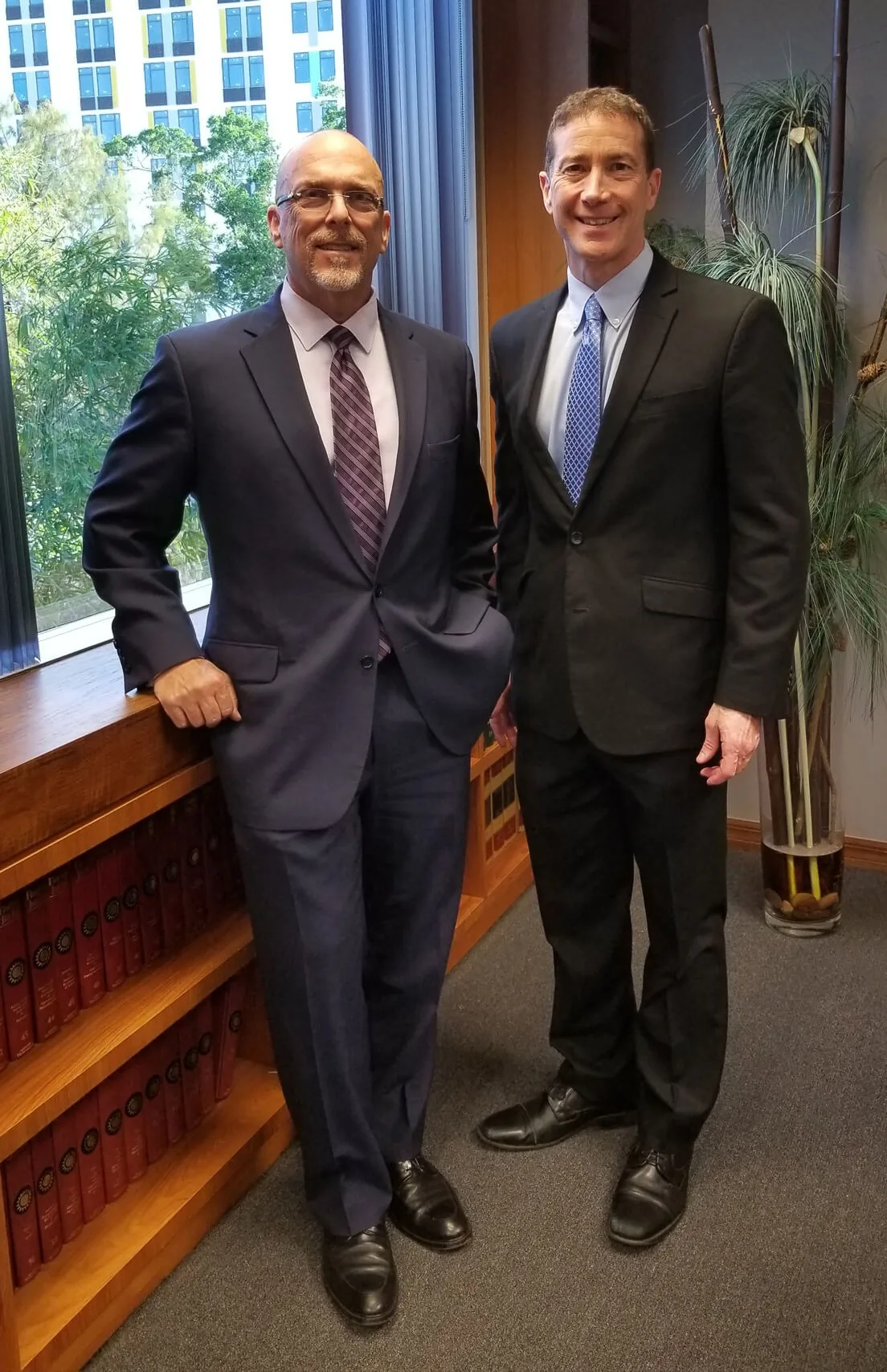
The Defense Base Act lawyers at Templer & Hirsch have represented injured workers and contractors for over 35 years and recovered more than $100 million for clients. When you call, you talk to an attorney, not a case manager.
- David L. Templer: Founding partner with decades of trial experience handling Defense Base Act, longshore, and complex injury cases.
- Mark Hirsch: Partner concentrating on DBA, longshore, and serious injury claims; known for hands-on client communication.
Defense Base Act FAQs: Coverage, Deadlines, and Benefits
What is the difference between a Defense Base Act attorney and a DBA lawyer?
Nothing. DBA is just the abbreviation, so a DBA attorney, a DBA lawyer and a Defense Base Act law firm are all the same thing. Judge an office on how many of these federal claims it has actually run before a Department of Labor administrative law judge, not on the wording it uses.
Who is covered by the Defense Base Act?
Civilian employees on US military bases overseas, US government contractors abroad, and certain public-works employees, including translators, security, construction, logistics, and IT staff. 42 U.S.C. §1651. Coverage follows the contract, so subcontractor and staffing-agency employees are covered on the same terms.
Do I have to be injured on a military base to qualify?
No. The DBA applies to any qualifying contract overseas, even if the injury occurred off base.
What injuries does the DBA cover?
Any injury or death arising out of overseas employment: IEDs, vehicle accidents, falls, equipment failures, plus psychological injuries like PTSD, anxiety, depression, and TBI.
How long do I have to file?
30 days written notice to your employer; one year to file the formal claim (two years for occupational diseases or PTSD). Tolling rules can extend the clock if you didn’t immediately know the injury was work-related.
What benefits does the DBA pay?
Uncapped medical care, two-thirds of average weekly wage up to the federal maximum, permanent impairment compensation, vocational rehab, and death benefits to surviving spouses and dependents.
How much are Defense Base Act settlements worth?
There is no standard figure. A settlement is driven by your average weekly wage, documented permanent impairment, whether you can return to the same work, and the future medical care being closed out. Most claims resolve as a lump sum under Section 8(i), which the Department of Labor has to approve. Our DBA settlement calculator gives you a starting range.
Who buys Defense Base Act insurance, and can I pick my own doctor?
Your employer buys the policy under FAR 52.228-3, and you never pay for it. Under 33 U.S.C. §907(b) you choose your own treating physician; the employer only picks when you need care immediately. If your employer never bought coverage, the prime contractor can be liable and you may be able to sue the company directly.
Are PTSD and TBI covered?
Yes. Psychological injuries are recognized DBA injuries when linked to overseas employment. These claims often face the toughest carrier resistance, so strong medical documentation matters.
Can I file a claim while still overseas?
Yes. We handle DBA claims remotely and file everything on your behalf.
What if my claim was denied?
A denial moves the case into the hearing track. We appeal, represent you at the informal conference and before an administrative law judge, and work to reverse unfair denials. Watch the 30-day window on any compensation order.
Can I sue the contractor or the US government?
The DBA is the exclusive remedy against your employer. Sovereign immunity usually bars suits against the US government. Third-party negligence claims against subcontractors, equipment makers, or other employers may still be available.
Reviewed and updated September 11, 2026 by Mark Hirsch.
If you or a loved one has been injured, the most important step you can take is to speak with an experienced attorney as soon as possible. Call Templer & Hirsch today for a free, confidential consultation. We are ready to help.