Workers’ Compensation Attorneys for Injured Florida Employees
Getting hurt at work brings worry about more than your injury: your paycheck, your medical care, and how your employer will treat you now. You are not alone, and you have rights that do not depend on your boss agreeing with you.
The firm of Templer & Hirsch is devoted to representing employees injured in work accidents, and workers’ compensation is a core part of our practice. Workers’ compensation is a form of insurance that provides medical care and financial benefits to employees who are hurt on the job or develop an occupational illness.
An injury does not have to be dramatic to qualify. A bartender who develops hearing loss after years of working in a loud Miami nightclub, for example, may be entitled to benefits because the condition is job-related.
Florida workers’ compensation is a no-fault system, which means you do not have to prove that your employer was negligent to receive benefits. You only have to show that your injury or illness arose from your job.

In Florida, most employers are required to carry workers’ compensation insurance, and eligible employees can receive benefits regardless of who was at fault for the injury or illness. Those benefits can include payment of medical expenses, a portion of your lost wages, and the cost of rehabilitation.
Work performed outside the country on a United States government contract follows a different set of rules. If that is your situation, read how the Defense Base Act compares to state workers’ compensation before you file anything, because the two systems have different deadlines and different medical rules.
The goal of workers’ compensation is to help injured employees recover and return to work. Depending on your situation, that can mean medical treatment and rehabilitation, or vocational training to help you find a new job if you are unable to return to your previous occupation.
If you have been injured on the job or are suffering from an occupational illness, report it to your employer and seek medical treatment as soon as possible, then follow the rules for filing a claim in Florida. In our experience, the single biggest factor in a smooth claim is reporting the injury early and in writing, before memories fade and deadlines pass.
Over more than 35 years, Templer & Hirsch has handled thousands of injury claims, and we can help you as well. If you have any questions about your rights or benefits, we invite you to call us for a free consultation.
Florida Workers’ Compensation Law: What Injured Workers Should Know
Florida workers’ compensation is governed entirely by Chapter 440 of the Florida Statutes. It is a separate, employer-funded system designed to pay medical bills and partial wages without proving fault. The trade-off is strict procedural rules and limited types of recovery.
The 30-Day Reporting Rule
Under Fla. Stat. §440.185, you must report a work injury to your employer within 30 days. Late notice is the most common reason valid claims are denied. Once you report, the employer must file a First Report of Injury with the carrier within seven days.
Benefits You’re Entitled To
Florida workers’ comp provides authorized medical care, two-thirds of your average weekly wage as temporary disability benefits (up to the state-set weekly maximum), permanent impairment benefits once you reach MMI, and vocational rehabilitation if you can’t return to your prior job. It does not provide pain and suffering damages.
Authorized Treating Physician
The insurance carrier chooses your treating doctor under Fla. Stat. §440.13. You are entitled to one one-time change of physician on written request. Going outside the authorized provider list almost always means paying out of pocket.
Exclusive Remedy and Third-Party Claims
Workers’ comp is the exclusive remedy against your employer under §440.11, meaning you generally cannot sue. However, if a third party caused or contributed to your injury (another driver, a subcontractor, an equipment manufacturer), you can pursue a separate personal injury claim outside the comp system, including pain and suffering. Identifying these third-party angles is one of the most valuable things an attorney does.
Filing a Petition for Benefits
If your claim is denied or benefits are cut off, you have two years from the date of injury (or one year from the last benefit payment) to file a Petition for Benefits with the Office of the Judges of Compensation Claims. We handle these proceedings every week. Before it gets that far, read what Florida requires of the carrier when workers’ comp is not paying your medical bills or your checks, because several of those deadlines are already running.
Common Workplace Injuries We Handle
Florida workers’ comp covers virtually any injury arising out of and in the course of employment. We’ve handled cases involving:
- Falls from heights: ladders, scaffolding, rooftops, especially on construction sites.
- Slip-and-fall on wet or oily floors in restaurants, hospitals, warehouses, and retail.
- Lifting and overexertion injuries: herniated discs, rotator cuff tears, hernias.
- Repetitive stress injuries: carpal tunnel, tendinitis, back strain from production-line or office work.
- Vehicle and equipment accidents while driving for work, operating forklifts, machinery, or heavy equipment.
- Falling objects and crush injuries in warehouses, ports, and construction.
- Burns, electrocution, and chemical exposure in industrial settings.
- Occupational diseases developed over time: respiratory illness, hearing loss, dermatitis.
Each injury has its own evidence trail and medical documentation. We coordinate with treating physicians and authorized providers to build the strongest record before disputes arise.
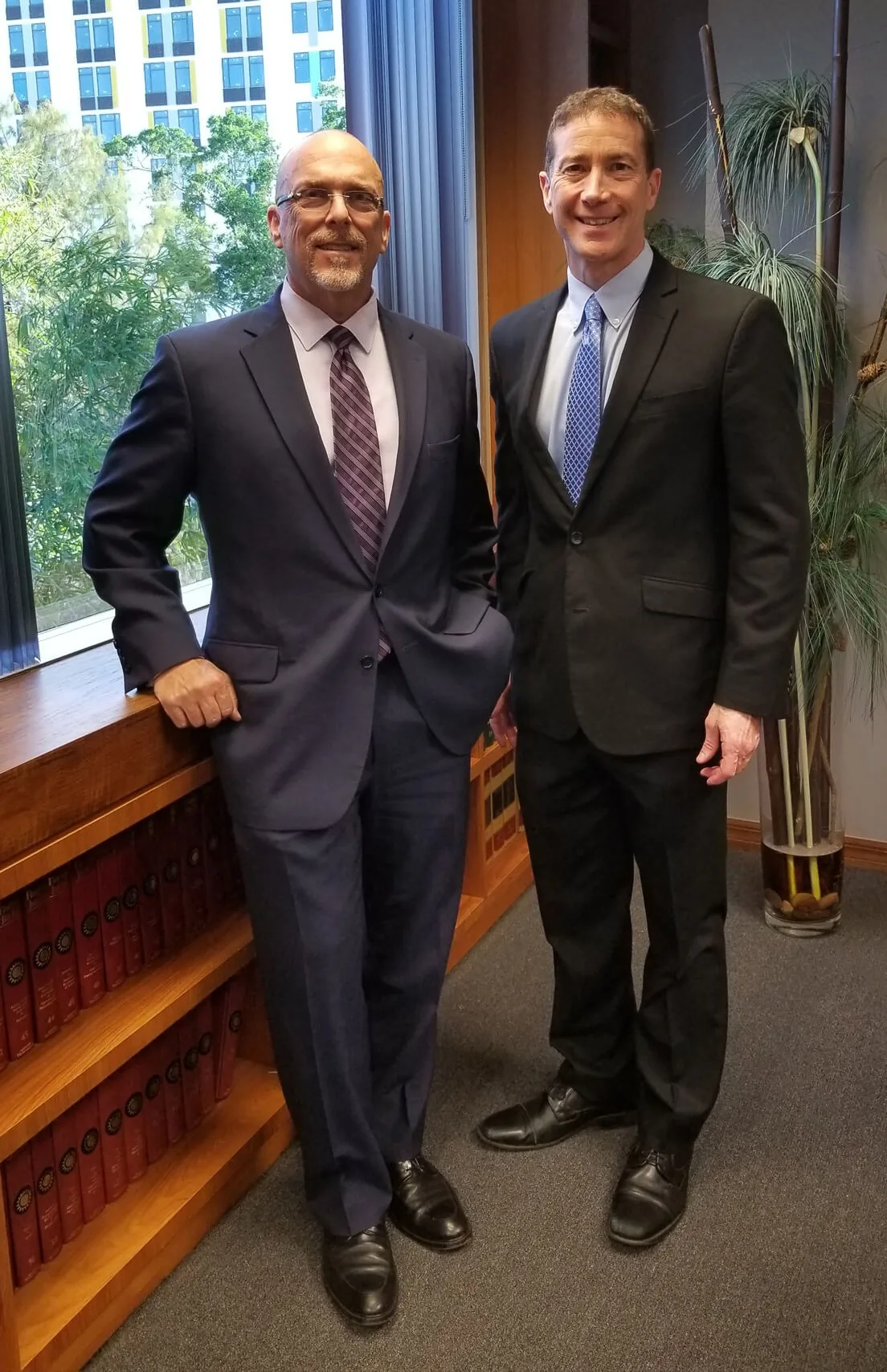
Meet the Attorneys Who Will Handle Your Case
Templer & Hirsch has represented injured Floridians for over 35 years and recovered more than $100 million for clients. When you call, you talk to an attorney, not a case manager.
- David L. Templer: Founding partner with decades of experience in workers’ comp, longshore, and personal injury.
- Mark Hirsch: Partner focused on workers’ comp and serious injury claims; known for hands-on client communication.
Frequently Asked Questions
How long do I have to report a work injury in Florida?
30 days from the date of injury under Fla. Stat. §440.185. Late reporting is the most common reason valid claims are denied. Tell your supervisor in writing as soon as you can.
What benefits am I entitled to?
Authorized medical care, two-thirds of your average weekly wage in temporary disability benefits (subject to a state-set max), permanent impairment benefits, and vocational rehabilitation. No pain and suffering.
Can I see my own doctor?
Usually no. The carrier chooses your authorized treating physician under §440.13. You can request one one-time change of doctor in writing.
Can I sue my employer?
Almost never. Workers’ comp is the exclusive remedy under §440.11. But you can often sue a negligent third party (another driver, subcontractor, equipment maker) for full damages including pain and suffering.
What if my claim is denied?
File a Petition for Benefits within two years of the injury (or one year of the last payment) with the Office of the Judges of Compensation Claims. Denials are common, but an experienced attorney can fight them.
How much does a workers’ comp lawyer cost?
Fees are regulated by statute and typically paid from recovered benefits or by the carrier in denied cases. You pay nothing upfront and nothing unless we recover for you.
If you or a loved one has been injured, the most important step you can take is to speak with an experienced attorney as soon as possible. Call Templer & Hirsch today for a free, confidential consultation. We are ready to help.