Templer & Hirsch Longshore Injury Attorneys
Getting hurt on the docks can leave you worried about your pay, your medical care, and whether making a claim will follow you at work. You are not alone, and you do not have to take on the employer or its insurer by yourself.
Templer & Hirsch represents injured maritime workers across the United States under the Longshore and Harbor Workers' Compensation Act (LHWCA). If you were hurt on or near U.S. navigable waters, including ports, docks, shipyards, and loading terminals, you may qualify for benefits and a longshore injury settlement to cover your medical bills and lost pay.
Our longshore injury lawyers know federal maritime law inside and out, and we fight to protect injured workers at every turn. Whether you're in Florida, California, or anywhere in between, we're here to help. In our experience, the cases that go smoothest are the ones where the worker reaches out early, before deadlines pass and evidence at the terminal disappears.
Need help now? Call 305-937-2700 and Speak with a Longshore Injury Attorney today. Free consultations available.
Injured at a Florida port like PortMiami, Port Everglades, or the Port of Fort Pierce? Our Florida longshore injury lawyer page covers local ports and how these claims work in our home state.
Don’t Miss Your Deadline
You have just one year from the date of your injury (or from the last compensation payment) to file a formal claim with the Department of Labor. You must also notify your employer within 30 days of the accident or symptoms appearing.
Waiting too long can result in a denied claim: even a serious injury will not save a late filing. If you're unsure where you stand, contact us now for a free case review.

What Qualifies as a Longshore Injury?
A longshore injury occurs when maritime workers who aren't part of a vessel's crew are injured during waterfront-related duties. If you are not sure which side of the crew line your job falls on, our post on the Jones Act versus the Longshore Act walks through the test courts actually apply. This includes:
- Loading and unloading vessels
- Building, repairing, or dismantling ships
- Port construction and maintenance
- Cargo handling and crane operation
- Shipyard work and terminal operations
Common injuries include:
- Traumatic brain injuries (TBI)
- Back and neck injuries
- Amputations and crush injuries
- Shoulder and knee damage
- Repetitive stress injuries
- Fatal workplace accidents
These injuries can cause lifelong disability and real financial strain. A longshore injury attorney can guide you through the federal claims process and push for the full benefits you are owed. Reach out today for a free consultation.
Why Hire a Longshore Injury Attorney?
A longshore claim is not like a normal workers' comp claim. Because the LHWCA is a federal law, it comes with its own procedures, strict filing deadlines, and insurance defense teams that fight hard to pay you less.
When you hire Templer & Hirsch, you get:
- Nationwide representation by attorneys experienced in federal injury law
- Guidance through the Department of Labor claims process
- Strong advocacy for your longshore injury settlement
- Access to medical experts and wage loss specialists
- No fees unless we win your case
What Is a Longshore Injury Settlement?
A longshore injury settlement is a financial resolution that covers your medical care, lost wages, and long-term disability. If you've been injured while performing maritime work, you may be entitled to compensation for:
- Medical treatment and rehabilitation
- Temporary or permanent disability payments
- Lost earning capacity or vocational training
- Death benefits to dependents (in fatal injury cases)
These benefits are awarded regardless of fault, but that doesn't mean the insurance company will pay fairly without a fight.
Want to Know What Your Case Is Worth?
Use our free, easy-to-use Longshore Injury Settlement Calculator to get an estimate in just minutes. This tool is designed to help injured workers understand what factors influence their potential settlement, including average weekly wage, extent of injury, and type of benefits available.
We Serve Longshore Workers Across the U.S.
At Templer & Hirsch, we're proud to represent longshore and harbor workers in:
- East Coast: New York, New Jersey, Georgia, Florida
- Gulf Coast: Texas, Louisiana, Mississippi, Alabama
- West Coast: California, Oregon, Washington
- Great Lakes Region and inland navigable waterways
Wherever your injury happened, our team can help.
You may also find helpful information directly from the U.S. Department of Labor's Office of Workers' Compensation Programs regarding the LHWCA claims process.
Warning Signs the Insurance Company Is Undervaluing Your Claim
If any of the following apply, call us immediately:
- You've been offered a low settlement
- Your benefits stopped without explanation
- The insurance company is delaying or denying treatment
- You were misclassified as a non-maritime worker
- You feel pressured to return to work too soon
These are common tactics used to reduce payouts. They are exactly why having a longshore injury lawyer on your side matters.
What to Do After a Longshore Injury
- Report the injury to your supervisor or employer in writing
- Seek immediate medical attention and document all treatment
- Keep records of time off, expenses, and witnesses
- Use our longshore injury settlement calculator to estimate your case
- Call Templer & Hirsch to protect your rights and file on time
Get Help from a Longshore Injury Lawyer Today
If you've been hurt while working at a port, shipyard, or any U.S. navigable waterway, you deserve real answers and real legal support.
Let Templer & Hirsch help you fight for the maximum longshore injury settlement you're entitled to. We've recovered millions for injured maritime workers and are ready to stand by your side.
Am I a Longshoreman Under This Law? The Two-Part Test
People search for a longshore accident lawyer, a longshore accident attorney and a longshore claims attorney, and they all mean this: someone who runs Longshore Act claims in front of a Department of Labor judge. If you were crew on the vessel rather than working the dock, this is not your law at all, and our maritime attorney page covers the Jones Act route instead. Most people who call us do not describe themselves as a longshoreman. They say they load ships, drive a top pick, lash containers, repair hulls, or work a terminal gate. The Act does not care what your job title says. It runs two tests, and you have to pass both.
Test one: what you do
Under 33 U.S.C. §902(3), an employee is “any person engaged in maritime employment, including any longshoreman or other person engaged in longshoring operations, and any harbor-worker including a ship repairman, shipbuilder, and ship-breaker.” That wording is deliberately wide. A dock worker moving cargo, a crane or top-pick operator, a lasher, a shipyard welder, a marine mechanic and a terminal maintenance worker all sit inside it.
The Act also names who it leaves out, in §902(3)(A) through (H): office, clerical, security and data processing staff, restaurant and retail workers on the property, most marina workers, temporary vendors, aquaculture workers, recreational vessel builders, ship crew members and masters, and workers handling vessels under 18 tons. Those exclusions only apply when state workers’ compensation actually covers the person instead, so being handed a state comp claim form is not proof you were excluded.
Test two: where you were standing
The second test is the location. 33 U.S.C. §903(a) reaches an injury “occurring upon the navigable waters of the United States (including any adjoining pier, wharf, dry dock, terminal, building way, marine railway, or other adjoining area customarily used by an employer in loading, unloading, repairing, dismantling, or building a vessel).”
Read the list inside the parentheses again, because that is where the argument usually happens. A terminal is on it. So is a pier, a dry dock and a marine railway. You do not have to have been over water when you were hurt. A dockworker crushed by a container in a yard several hundred feet from the berth is on an adjoining area customarily used for loading, and that is what the statute asks.
Here is what we tell people to do first: write down exactly where you were standing and what was happening around you when it happened. Not the job title on your badge, the ground under your feet and the work going on. That is the record a longshoreman injury lawyer builds a coverage argument from, and it gets harder to reconstruct every week that passes.
The LHWCA: What Maritime Workers at Every US Port Should Know
The Longshore and Harbor Workers’ Compensation Act is a federal workers’ compensation system that applies the same way at every US port. Whether you were injured in Houston, Los Angeles, New York, or Seattle, the same federal statute governs your claim.
Who Is Covered Nationwide
Under 33 U.S.C. §901 et seq., the LHWCA covers maritime employees injured on US navigable waters or in “adjoining areas customarily used for loading, unloading, repairing, or building a vessel.” Coverage applies at major ports nationwide:
- Los Angeles / Long Beach
- New York / New Jersey
- Houston
- Seattle / Tacoma
- New Orleans
- Savannah
- Oakland
- Charleston
- Norfolk / Hampton Roads
- Florida ports (Miami, Everglades, JAXPORT, Tampa, Canaveral, Palm Beach)
30-Day Notice and One-Year Filing Deadline
You must give written notice to your employer within 30 days, and file the formal claim with the US Department of Labor’s Office of Workers’ Compensation Programs within one year (33 U.S.C. §913). Occupational disease claims have a separate two-year discovery rule.
LHWCA Benefits Are Higher Than State Comp
LHWCA pays uncapped medical care, two-thirds of average weekly wage up to the federal maximum (significantly higher than most state caps), permanent impairment compensation, vocational rehabilitation, and death benefits to surviving family. Maritime workers placed in state comp by mistake routinely lose tens of thousands in benefits.
Third-Party Claims Under Section 905(b)
The LHWCA is generally the exclusive remedy against your employer, but 33 U.S.C. §905(b) lets you sue the vessel owner for negligence outside the comp system. These third-party claims can recover full personal injury damages (including pain and suffering) on top of LHWCA benefits.
Working With Out-of-State Clients
LHWCA claims are heard in administrative proceedings before the US Department of Labor, with appeals through federal court. We handle most of the case remotely by phone, email, and video, with selective travel for hearings and depositions.
Common Longshore Injuries at US Ports
Cargo handling, ship repair, and harbor work are among the most dangerous occupations in the country. We’ve represented dock workers, stevedores, and ship repairers injured by:
- Falls from height off gangways, container stacks, ship decks, and ladders.
- Slip-and-fall on wet or oily decks caused by spills, weather, or inadequate cleanup.
- Crushing and struck-by injuries from containers, cranes, forklifts, and reach stackers.
- Cargo-handling injuries to the back, shoulder, and knee from awkward lifts and unstable loads.
- Equipment failures such as broken hoists, failed rigging, and defective machinery.
- Vehicle accidents on the terminal involving trucks, yard tractors, and hostlers.
- Hearing loss and respiratory disease from prolonged noise and dust exposure.
Each injury type opens specific avenues for both LHWCA benefits and 905(b) vessel-negligence claims. We know what evidence to lock down before it disappears.
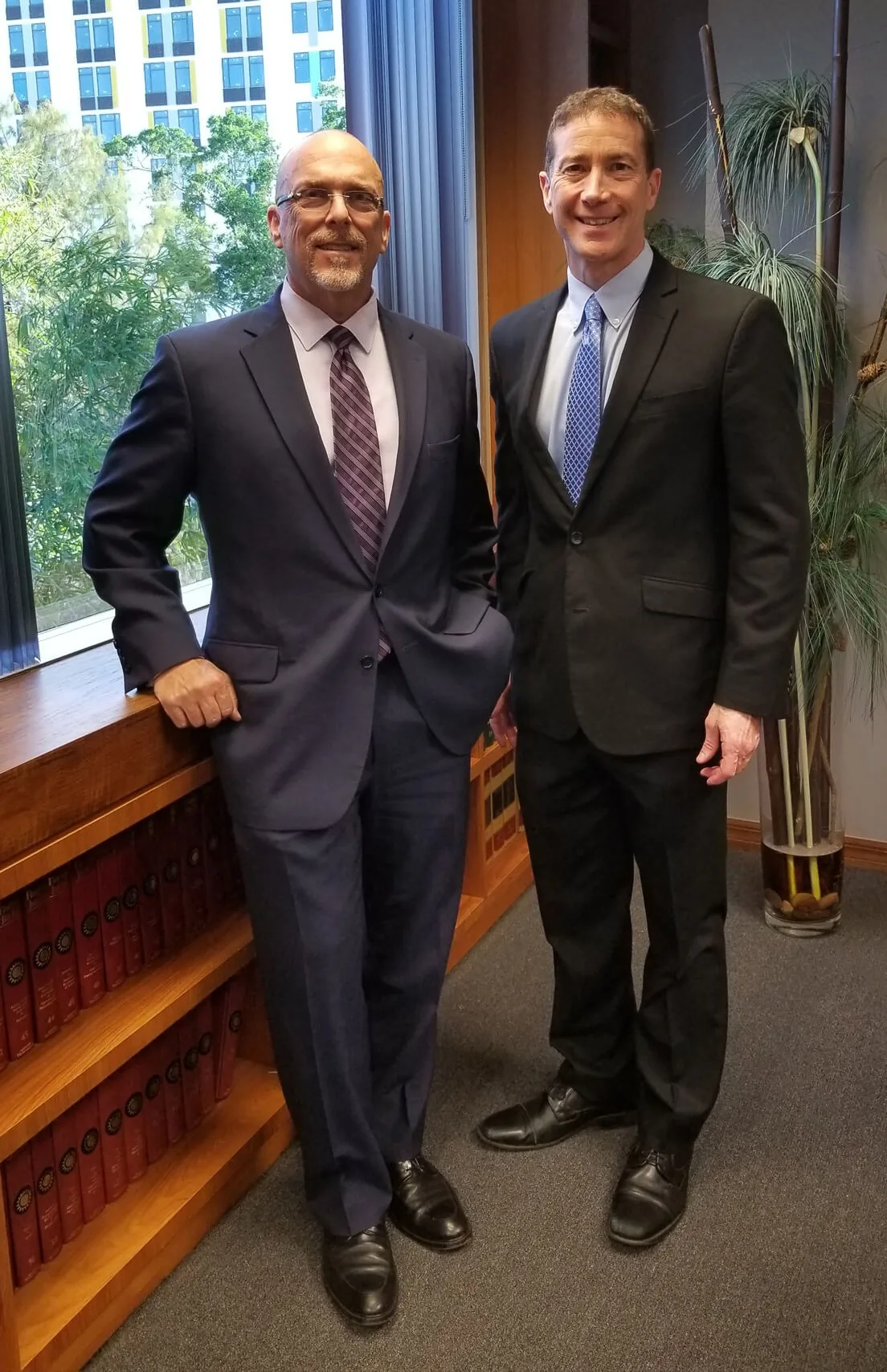
Meet the Attorneys Who Will Handle Your Case
Templer & Hirsch has represented injured maritime workers across the country for over 35 years and recovered more than $100 million for clients. When you call, you talk to an attorney, not a case manager.
- David L. Templer: Founding partner with decades of trial experience handling LHWCA, Jones Act, and admiralty cases nationwide.
- Mark Hirsch: Partner concentrating on longshore, Jones Act, and serious injury claims; known for hands-on client communication.
Frequently Asked Questions
What is the LHWCA and who does it cover nationwide?
The Longshore and Harbor Workers’ Compensation Act (33 U.S.C. §901 et seq.) is a federal workers’ comp system covering maritime workers at every US port and adjacent waters.
Can I hire a Florida-based firm if I’m injured at another US port?
Yes. LHWCA cases are heard in administrative proceedings before the US Department of Labor with federal court appeals. We handle the case remotely with selective travel for hearings and depositions.
Is a longshore accident lawyer different from a longshore claims attorney?
No, they are the same job under different names. What separates one office from another is whether it has actually run Longshore Act claims through an informal conference and a hearing before a Department of Labor administrative law judge, because none of that resembles a state workers’ compensation case.
Does this cover dock workers, or only longshoremen?
Both, and the distinction people worry about is not in the statute. §902(3) covers “any longshoreman or other person engaged in longshoring operations,” plus harbor workers, ship repairers, shipbuilders and ship-breakers. A dock worker moving cargo on a terminal is inside that wording. What decides it is the work and the place, not the words on your paycheck.
How long do I have to file?
30 days written notice to your employer; one year to file the formal claim with the Department of Labor (33 U.S.C. §913). Two-year discovery rule for occupational diseases.
How does LHWCA compare to state workers’ comp?
Higher weekly benefit maximums, uncapped medical coverage, and the option to sue vessel owners under §905(b). State comp systems are usually more limited.
What benefits does LHWCA pay?
Uncapped medical care, two-thirds of average weekly wage up to the federal maximum, permanent impairment compensation, vocational rehab, and death benefits to surviving family.
Can I sue the vessel owner too?
Yes. 33 U.S.C. §905(b) lets you sue the vessel owner for negligence outside the comp system. We pursue both tracks in parallel where the facts support it.
If you or a loved one has been injured, the most important step you can take is to speak with an experienced attorney as soon as possible. Call Templer & Hirsch today for a free, confidential consultation. We are ready to help.